


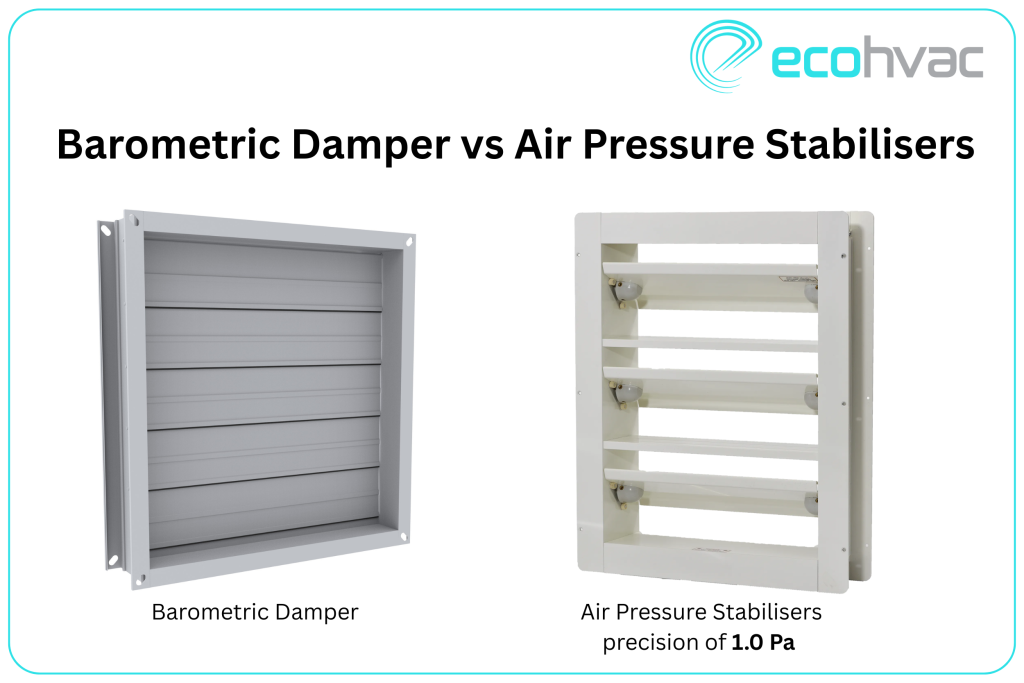
Barometric dampers are found in chimneys, stove pipes, and oil-fired furnaces. It is found in the flue pipe downstream from the furnace, and it is a weighted flap that acts as a mixing valve, adjusting the dilution of air and counteracting the effects of any drafts from the chimney. Its primary function is to isolate the burner from the changes in air pressure and temperature at the chimney exit, and the damper does this by pulling already heated room air into the exhaust. Although the basic premise of a barometric damper is similar to that of an air pressure stabiliser (controlling changes in air pressure), the similarity stops here.
When specifying products, the terminology used in the industry needs to evolve. It is unacceptable to install a barometric damper in a healthcare setting; hence, it should not be specified in any supporting documents. Specifying this type of product causes uncertainty and highlights a shortfall in the knowledge base that the industry desperately needs.
Air pressure stabilisers are utilised to precisely maintain the differential pressure between adjacent rooms, ultimately closing the blades as soon as the air pressure within the critical environment drops below the critical level. Airflow diverts to pass through the open door forcing back airborne contamination without the need to alter the air extract supply.
It is common within the Australian market that damper suppliers often offer a ‘non-return damper’ with blade weights added to control the opening pressure of the damper. However, these devices do not have a precision of 1.0 Pa.
‘Diagram 1’ emphasises typical blade pattern pressure control. There is a significant difference between the design pressure (threshold pressure) and pressure at a higher airflow.
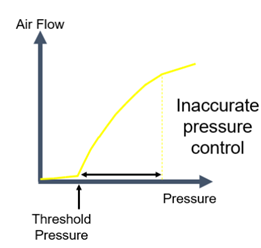
Diagram 1: Pressure control pattern of a typical blade
The air pressure stabiliser is designed as a highly precise device and set to respond to a 1.0Pa pressure differential between spaces. ‘Diagram 2’ illustrates the pressure control is far more precise between design pressure (threshold pressure) and actual vs airflow.
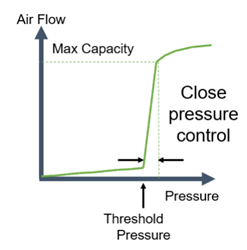
Diagram 2: Pressure control pattern of APS


